
Have you ever wondered how much water a small yard really needs and whether smarter design can cut bills and save resources?
I set out to rethink my urban green spaces with water-smart ideas that fit tight lots, balconies, and narrow strips. The EPA says nearly one-third of residential water use goes to lawn irrigation — a huge waste I wanted to stop. Switching to drought-tolerant landscaping and efficient drip systems can cut outdoor water use by 30% to 80%.
My approach groups compatible plants, reduces thirsty turf, and favors mulch and permeable surfaces so rain soaks in instead of running off. The plan aims for year-round curb appeal, pollinator support, and lower water use without heavy maintenance.
Key Takeaways
- Urban yards can cut water use dramatically with simple design changes.
- Xeriscape principles—grouping plants and limiting turf—deliver big savings.
- Drip irrigation and mulch reduce evaporation and maintenance.
- Permeable hardscapes help rain recharge soil, not runoff.
- Small spaces like rooftops and curb strips offer high-impact results.
Why I’m Embracing Water‑Wise Design in the City
Hot summers and shorter rainfall windows pushed me to rethink how my yard uses water. Lawn irrigation can account for up to one-third of residential water use, so small changes add up fast.
I embrace drought-tolerant landscaping because summers are hotter, water restrictions happen more often, and I want a landscape that thrives without constant work. Choosing the right plants for my microclimate and existing soil saves me time and reduces ongoing maintenance.
I treat water savings as a budget and climate win. Simple ideas like hydrozoning and mulch stretch irrigation intervals and cut chores. I aim for multi-season interest so the yard looks planned year-round without frequent swaps.
Resilience is central: I pick species that cope with heat waves and rebound after rain. I amend soil carefully to improve moisture retention and drainage rather than overworking the whole site.
| Strategy | Primary Benefit | Typical Time to Implement | Estimated Water Use Reduction |
|---|---|---|---|
| Hydrozoning (group by water needs) | Targeted irrigation, less waste | 1–2 days planning, a weekend to plant | 20–50% |
| Mulch & soil improvement | Slower evaporation, better retention | One weekend | 10–30% |
| Choose waterwise plants | Low upkeep, year-round interest | Phased over a season | 30–60% |
City Xeriscaping Made Simple
I mapped sun, shade, and wind across my lot to place plants where they actually thrive. That simple step helped me cut turf, limit thirsty spots, and plan practical access for maintenance.
Hydrozoning: Grouping Plants by Water Needs
I group high-, medium-, and low-water areas so irrigation matches need, not habit. Thirsty edibles sit near a hose bib. Tough natives and succulents go to the leanest corners.
- I use drip irrigation and drip lines for beds and soaker hoses under mulch for shrubs.
- I keep pathways and valves visible so I can check emitters and adjust flow quickly.
- I mulch each zone to keep soil cooler and reduce evaporation as plants settle in.
- I track seasons: more water during establishment, then I back off once roots spread.
| Method | Best for | Water Efficiency |
|---|---|---|
| Drip lines | Flower beds and shrubs | High |
| Soaker hoses | Shrub runs under mulch | Moderate |
| Hand watering | New transplants | Targeted |
Cutting the Thirsty Lawn Without Losing Curb Appeal
To save water fast, I targeted the hottest, hardest-to-water corners of my front yard. The EPA notes lawns drive a large share of outdoor water use, so those strips gave me quick wins.
I phased removal a few hundred square feet at a time. Starting small let me test plant mixes and adjust before changing large areas.
I replaced turf with drought-tolerant landscaping features: planting beds, gravel paths, and a small rock garden for texture. For places I still wanted green, I picked low, walkable groundcovers and tough grasses that need far less attention.
- I keep clean edges and simple shapes so the yard reads as designed, not neglected.
- A focal pot or boulder anchors the layout and guides the eye through the garden.
- I run a basic drip line under new beds and mulch heavily to cut maintenance and reduce watering.
| Before | After | Typical Water Use Change |
|---|---|---|
| 200 sq ft of turf lawn | Planting beds + gravel path | 50–70% reduction |
| Small green patch (walkable) | Low groundcovers or clumping grasses | 30–50% reduction |
| Full turf frontage | Mixed beds, rock garden, focal feature | 60–80% reduction |
I monitor street-facing areas and edit plants that demand more water than I want to give. I also calculate water use before and after to see which swaps made the biggest difference.
Drip Irrigation That Saves Water (and Time)
A smart irrigation plan lets me give each plant just what it needs while cutting my weekly chores.
Drip irrigation delivers water straight to the root zone, which can save 20–50% compared with spray systems. I favor systems that keep foliage dry to reduce disease in tight urban plantings and to get more efficient water use.
Soaker Hoses vs. Poly Tubing: Where I Use Each
I use poly tubing with button emitters through mixed borders and around shrubs where I want precise flow to individual plants.
Soaker hoses go under mulch along hedge lines and foundation plantings for an even seep that is simple and reliable.
Drip Tape and Micro Sprinklers for Beds and Groundcovers
Drip tape is my go-to in raised beds and veggie rows because emitter spacing matches shallow-rooted plants. For broad groundcover areas or new seed, I set micro sprinklers to give a gentle, even pattern without overspray on pavement.
Timers and Early‑Morning Watering to Reduce Evaporation
I attach battery timers and water in the early morning to limit evaporation. Then I audit the lines monthly to catch clogs and adjust run times as plants mature.
Mulch over lines stabilizes soil temperature, cuts evaporation further, and shields tubing from UV. I also install quick shutoff valves so I can scale zones as seasons change.
| Component | Best Use | Typical Benefit |
|---|---|---|
| Poly tubing + emitters | Mixed borders, shrubs | Precise flow per plant |
| Soaker hose | Hedge lines, foundation beds | Even seep under mulch |
| Drip tape / micro sprinklers | Raised beds, groundcover | Custom spacing, gentle coverage |
For practical guidance on layout and run times in raised beds, see my notes on watering raised beds.
Mulch Choices That Beat Heat and Slow Evaporation
Mulch is the simplest change that quietly holds moisture and cuts heat stress across beds. I pick materials with the plants and soil in mind so every layer earns its keep.
Organic Options I Use: shredded bark, straw, compost
I favor shredded bark or compost around perennials and shrubs. Organic mulch slows evaporation, suppresses weeds, and improves soil over time.
Compost gets a spot as a top-dress in hungry beds to boost soil life and moisture holding without smothering roots.
Inorganic Choices: gravel, crushed stone, lava rock
Gravel and crushed stone last longer and work well where irrigation is limited. I use them around ornamental grasses and succulents for fast drainage and reflective heat.
Heavier stones or bark nuggets stay put in windy areas so the layer keeps doing its job through the hottest months.
How Deep I Mulch in Different Areas
- I spread 2–3 inches in most areas to curb weeds and cut evaporation, refreshing by time and need.
- I pull mulch a few inches back from stems to prevent rot and keep beneficial insects active near the soil.
- I measure beds in feet of length and inches of depth before ordering material to avoid shortfalls on install day.
| Mulch Type | Best Use | Typical Depth (inches) | Key Benefit |
|---|---|---|---|
| Shredded bark | Perennials, shrubs | 2–3 | Improves soil, slows evaporation |
| Compost | Nutrient-hungry beds | 1–2 (top-dress) | Feeds soil life, holds moisture |
| Gravel / lava rock | Ornamental grasses, succulents | 1–2 (surface) | Long-lasting, good drainage |
| Bark nuggets / heavy stone | Windy strips | 2–3 | Resists blow-away, stable cover |
Native Plants I Rely On for Dry Spells
I rely on deep-rooted natives to carry beds through long dry spells with little fuss. These species were born for lean conditions and repay me with blooms, seed heads for birds, and low upkeep.
Prairie Favorites: Black‑Eyed Susan, Purple Coneflower, Yarrow
I plant black-eyed Susan, purple coneflower, and yarrow in sweeps so blooms overlap and pollinators always have forage. Each has a different height and bloom time, which keeps beds lively throughout the season.
Designing for Pollinators and Multi‑Season Color
I choose plants with sturdy foliage and textured leaves; that often means better drought resilience. I avoid marsh or floodplain species and pick prairie or dry-meadow natives that match my rainfall and soil.
- I deadhead lightly for neatness, but I leave some seed heads for birds and winter structure.
- I add a thin compost top-dress in spring to support soil life without encouraging soft, thirsty growth.
- I tuck in a few native grasses for movement and structure; they pair well with coneflower and yarrow.
| Species | Height | Bloom Time | Soil Preference |
|---|---|---|---|
| Black‑Eyed Susan | 18–36 in | Mid-summer to fall | Lean, well-drained |
| Purple Coneflower (coneflower) | 24–36 in | Summer | Dry to average, well-drained |
| Yarrow | 12–30 in | Late spring to summer | Poor, sandy, well-drained |
For more ideas on choosing the best drought-tolerant plants and matching species to local conditions, I keep a bookmarked list that I consult before I buy. This saves me time and prevents mistakes.
Succulents and Cacti for Modern, Low‑Water Style
Succulents and cacti bring bold form and low fuss to tight outdoor spots. I use them where structure and low maintenance matter most.
I plant agave, aloe, crassula, echeveria, sedum, and sempervivum for strong texture and drought tolerance. I water grouped pots about every 10 days in warm months and stretch to 4–5 weeks in cold months.
I rely on gritty, fast‑draining soil and tuck specimens into crevices, rock pockets, and a rock garden so roots never sit wet. For containers and container displays I set a light drip line or use a watering wand for precise delivery.
- I top-dress pots with gravel to keep crowns dry and reduce fungus gnats.
- I pair small succulents with airy grasses or herbs to soften edges and add movement in heat.
- I rotate pots for even sun and protect leaves during storms or heat waves.
| Species | Best Use | Winter Hardiness | Watering Rhythm |
|---|---|---|---|
| Agave | Focal plant in rock gardens | Varies by species (many hardy) | Deep, infrequent |
| Echeveria / Crassula | Containers, stoops | Mild winters preferred | Every 10 days in summer |
| Sedum / Sempervivum | Groundcover, rock gardens | Cold-hardy | Sparse; lengthen in cool months |
Ornamental Grasses That Thrive on Neglect
Ornamental grasses give a garden instant structure with very little fuss. I plant them where I want steady movement and low upkeep.
Deep Roots, Waxy Leaves, and Wind‑Friendly Movement
Many of these grasses send roots 3–6 feet down and sometimes reach 10 feet. That lets them tap cooler, deeper moisture and survive long dry conditions with little help.
- I rely on ornamental grasses for height, motion, and a calm form that reads well even when other plants look tired.
- I choose varieties with narrow, rolled, or waxy leaves that cut water loss and tolerate summer heat.
- I water only during establishment, cut back in late winter, and avoid heavy fertilizer so they stay neat and not thirsty.
- I plant them in odd-number groups to create rhythm and use them as anchors at entries and corners.
| Species | Typical Root Depth (feet) | Best Use | Maintenance |
|---|---|---|---|
| Switchgrass (Panicum) | 3–6 | Screens, massing | Low; cut back annually |
| Feather Reed (Calamagrostis) | 3–5 | Focal clumps, borders | Low; divide every 4–6 years |
| Blue Oat (Helictotrichon) | 2–4 | Textural contrast | Low; minimal trimming |
Drought‑Resistant Grasses for Small Urban Lawns
Small lawns can still look good while using far less water if you pick the right turf mix. I choose species that tolerate dry spells by dormancy, then bounce back when rain returns.
Cool vs. Warm Season Options for U.S. Cities
Up north I favor cool‑season choices like tall fescue or Kentucky bluegrass. They stay green in spring and fall and need less irrigation in cooler months.
In warmer zones I use warm‑season options: buffalograss (roots over 5 feet deep), bermudagrass, St. Augustine, or zoysia. These varieties handle heat by going tan, not dying.
- Bluebunch wheatgrass works where rainfall is 10–20 inches; Secar and Discovery varieties can manage with about 8 inches per year.
- I mow at proper height and leave clippings to shade soil, which reduces watering time and keeps roots healthier.
- Smaller lawn footprints and patching with compatible seed save both time and water compared with full replacement.
- I aerate and top‑dress thinly with compost to improve infiltration and encourage roots deeper into the feet of soil profile.
| Climate | Good Choices | Key Benefit |
|---|---|---|
| Cool‑season (north) | Tall fescue, Kentucky bluegrass | Greener in spring/fall, lower summer demand |
| Warm‑season (south) | Buffalograss, bermuda, zoysia, St. Augustine | Heat tolerant, dormancy survival |
| Low‑rain areas | Bluebunch wheatgrass (Secar, Discovery) | Performs on 8–20 inches annual rainfall |
Rock Gardens That Look Good Year‑Round
A well-placed rock garden makes problem corners look intentional and tidy. I build them where grass fails: sunny slopes, narrow strips, patios, and other tough spots.
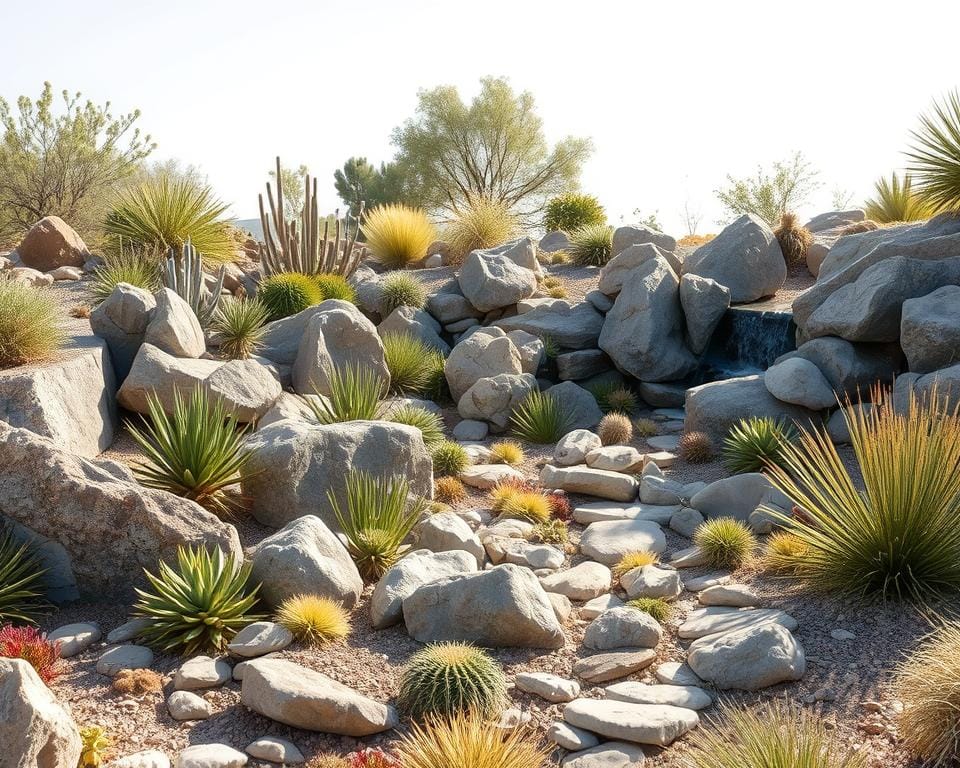
Pairing Stones with Sedum, Creeping Thyme, and Lavender
I layer rock and gravel with 3–4 inches of gritty mix for fast drainage and to keep crowns dry. I mass sedum, creeping thyme, and lavender for bloom waves and steady pollinator visits.
I tuck small succulents into pockets for year-round texture. I vary stone size and color to add depth and repeat elements for a cohesive look.
- I site beds on sunny slopes or tight corners so they need less water and fewer repairs.
- I pull weeds while small and trim spreaders lightly to keep edges crisp.
- I place shallow pockets near edges and deeper holes behind boulders to match each plant’s root size.
| Feature | Typical Implementation | Benefit |
|---|---|---|
| Rock / stone | Mix of sizes, repeated color palette | Structure, low watering |
| Gravel + gritty mix | 3–4 inches top layer | Reliable drainage, crowns stay dry |
| Plant palette | Sedum, thyme, lavender, succulents | Pollinators, low upkeep, year‑round interest |
Rain Gardens: Banking Stormwater for Dry Conditions
I turned a soggy low corner into a useful basin that banks stormwater for later dry spells. Rain gardens are shallow basins that collect roof and hardscape runoff so water soaks into soil instead of rushing away. That stored moisture helps the landscape through dry periods while cutting erosion and runoff.
Picking the Right Low Spot and Staying 10 Feet from Foundations
I scout a natural low spot or dig a shallow basin at least 10 feet from my foundation to catch roof and driveway runoff. I avoid placing the basin near structures so water never pools against walls.
I shape gentle berms to slow flow and increase infiltration. Permeable hardscape or a small swale guides downspouts into the garden without causing standing water near buildings.
Plant Mix I Use: Switchgrass, Blue Flag Iris, Coneflowers
I plant a mix of deep-rooted native plants and tougher perennials: switchgrass, blue flag iris, black-eyed Susan, and coneflower. These species tolerate brief inundation and then dry feet between storms.
- I layer soil and compost in the basin floor to improve drainage and give roots a stable profile.
- I set a drip irrigation line only for establishment, then taper watering as plants mature and the system self-regulates.
- I mulch with shredded bark to suppress weeds while new plants fill in, topping up lightly after heavy storms.
- I size the basin to my roof area and typical storm volume so it fills and drains within a day and prevents erosion.
| Feature | Implementation | Benefit |
|---|---|---|
| Basin location | Natural low spot, ≥10 feet from foundation | Protects structures, captures runoff |
| Plant palette | Switchgrass, blue flag iris, coneflower, black-eyed Susan | Handles wet-dry cycles, stabilizes soil |
| Soil & mulch | Layered soil/compost, shredded bark top | Improved drainage, reduced weeds |
Container Gardens That Sip, Not Guzzle
Pots and planters are where I get big water savings in a small footprint. I treat each container as a mini‑garden that can be moved, shaded, or grouped to match a plant's needs.
.
I favor larger sizes because big pots dry more slowly and give roots room to find moisture. I pick ceramic or resin over plain clay to reduce evaporation and keep root zones cooler.
Self‑Watering Pots, Mixes, and Simple Systems
Self‑watering pots cut chores and make watering predictable. I also set drip irrigation for grouped containers to deliver water straight to roots with less loss.
- I upsize container choices so quality soil holds moisture longer and needs less frequent attention.
- I blend a moisture‑holding mix: compost, coarse sand or grit, and a light potting base for sharp drainage and steady moisture retention.
- I mulch the surface with fine gravel or bark to slow evaporation and keep soil cool in peak heat.
- I group containers by thirst and rotate sun lovers and shade seekers to match microclimates.
- I refresh the top inches of mix each season and root prune perennials in tight pots to keep vigor high.
| Pot Type | Best Size | Key Benefit |
|---|---|---|
| Ceramic / Resin | Large (12–20 in) | Good moisture retention, cooler roots |
| Self‑watering | Medium to large | Lower maintenance, steady supply |
| Unglazed clay | Any | Breathable but dries faster |
Raised Beds That Balance Drainage and Moisture
Raised beds give me precise control over soil mix and drainage so plants establish faster.
I build beds where native soil is compacted or poor. I blend topsoil with compost and a bit of coco coir to hold moisture without losing drainage. For most perennials and edibles I aim for 10–12 inches of planting depth; shrubs get deeper pockets.
I run drip irrigation along rows and bury lines slightly so flow stays steady and surfaces stay tidy. I mulch to buffer temperature swings, protect soil life, and stretch the time between waterings. I group plants by thirst and rooting depth so each bed acts as a mini drought-tolerant landscape.
- I orient beds for morning sun to reduce afternoon stress in hot courtyards.
- I rotate crops and refresh the top layer each year to keep soil lively and resilient.
| Feature | Typical Mix | Depth (inches) | Benefit |
|---|---|---|---|
| Shallow beds | Topsoil + compost + coco coir | 10–12 | Good for perennials and most veggies |
| Deep pockets | Topsoil + compost, extra coarse material | 18–24 | Room for small shrubs, deeper roots |
| Irrigation | Buried drip lines + surface mulch | n/a | Efficient water delivery, less runoff |
Hardscaping That Lowers Water Use and Manages Runoff
Hard surfaces can do more than look tidy; they can cut my watering needs while shaping how rain moves across my yard. By trading thirsty turf for careful paving, I shrink plantable areas and the irrigation they need.
I use permeable paths, flagstone, and gravel courtyards so rain soaks into soil instead of running off. Grading patios toward beds turns storms into free water for plants and helps control erosion.
Permeable Paths, Patios, and Gravel Courtyards
- I replace small lawn patches with gravel courtyards and permeable pavers that need zero irrigation.
- Permeable joints and a gravel sub‑base let water filter down rather than rush to the street.
- I add boulders and rock accents to give structure and echo local geology.
- I grade surfaces to nudge runoff into planting beds, reducing erosion and supporting the larger landscape.
- I keep crisp edging and leave irrigation stubs near beds so I can expand plantings later.
| Surface | Key Benefit | Maintenance |
|---|---|---|
| Permeable pavers | Fast infiltration, low runoff | Occasional joint refill |
| Gravel courtyard | No irrigation, flexible layout | Rake and edge annually |
| Flagstone on sand | Natural look, directs water | Reset stones as needed |
Curbside Strips and Small Spaces: My Tough, Beautiful Picks
I learned that tiny roadside strips can deliver big curb appeal if I choose plants that shrug off reflected heat and compacted soil.
Heat‑Tolerant Groundcovers and Gravel Plantings
I treat curb strips as high-heat test beds where rugged, low-care species thrive. I pick low groundcovers and tufted grasses that tolerate foot traffic and reflected sun without sulking.
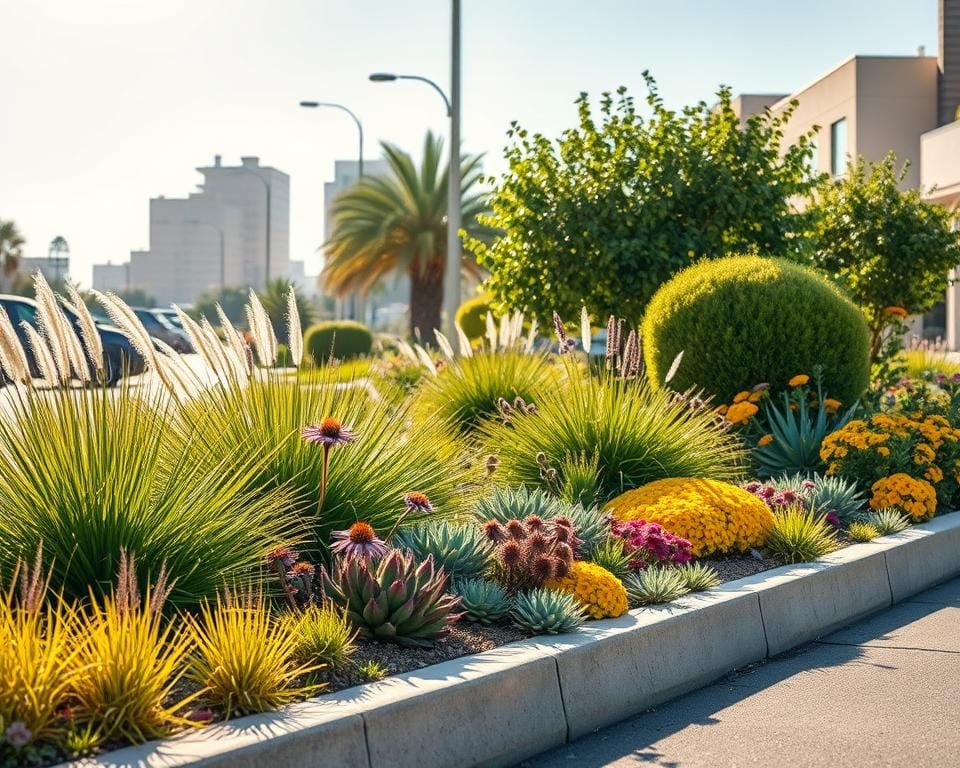
I lay a compacted gravel base and add a couple of inches of decorative top to suppress weeds and keep the strip tidy. I mass plants in repeating blocks so the narrow area reads as one design from the street.
I tuck a few container accents where irrigation access is easy; they boost impact with minimal water. I also leave a soil window near tree roots so roots breathe and get occasional supplemental water.
| Feature | Best for | Key tip |
|---|---|---|
| Compacted gravel base | Sunny narrow strips | Top with 2–3 inches of decorative gravel |
| Low groundcovers | High‑traffic areas | Choose spreading types and space for mature habit |
| Containers | Entries and focal points | Group near hose or drip access for easy watering |
For plant selection and installation ideas I often consult resources on drought-tolerant plants before I buy. I avoid tall or thorny species near car doors and keep sightlines clear for safety.
drought-resistant city landscaping: My Step‑by‑Step Plan
My first step is a simple site tour to note sun angles, shady pockets, and where water pools after rain. I record spots that bake in afternoon sun and corners that stay cool. That map drives plant choices, irrigation layout, and where to add permeable paths.
Assess Sun, Soil, and Water Flow
I walk the site at different times to map light, wind, and runoff. I test soil texture and watch drainage after a shower.
If soil drains fast I leave it lean for xeric picks. Where it holds moisture I add compost and plan plantings that use that water well.
Phase the Project: High‑Impact Changes First
I focus on quick wins: shrink lawn, add permeable hardscape, and install drip or soaker irrigation. Then I group plants by thirst so each valve serves one consistent zone.
- Phase work over seasons to spread cost and time.
- Mulch new beds immediately and check emitters weekly at first.
- Track water-meter readings before and after to measure savings.
| Phase | Typical Time | Expected Water Use Change |
|---|---|---|
| Siting & soil tests | 1–2 weeks | Informs right plant choices |
| Hardscape & irrigation baseline | 1–3 weeks | 20–60% reduction |
| Planting & mulch | Seasonal phases | 30–70% reduction over time |
Conclusion
The changes I made show that thoughtful choices can cut outdoor water use and sharpen a yard’s look without constant fuss. A drought-tolerant landscape handles dry conditions and still delivers seasonal interest, color, and form with far less water.
I rely on resilient plants: native anchors like black-eyed Susan, coneflower, a few clumping grasses, and select succulents. These varieties and other varieties with tougher leaves signal lower thirst and better staying power through dry spells.
Mulch, efficient irrigation, and permeable surfaces balance moisture and cut maintenance so the garden matures into itself. Small, steady upgrades add up: smart use of space gives beauty, pollinator value, and long-term savings in one tidy package.
.
FAQ
What does "water‑wise design" mean for an urban yard?
I mean creating a garden that uses far less water by choosing plants suited to our climate, grouping them by needs (hydrozoning), improving soil with compost, and using efficient irrigation like drip lines and timers to deliver water where roots need it most.
How do I decide which areas need the most water?
I assess sun exposure, soil type, and where runoff collects. Sunny, sandy spots dry fast and need drought‑tolerant plants or mulch; shady, loamy areas retain moisture so I plant less thirsty species there. Mapping these zones guides my hydrozoning and irrigation layout.
Can I keep curb appeal without a thirsty lawn?
Absolutely. I replace parts of turf with ornamental grasses, native wildflowers like purple coneflower and black‑eyed Susan, gravel beds, or a neat rock garden. Small, well‑kept lawn patches framed by hardscape and planting beds still look polished while cutting water use.
When should I use soaker hoses vs. poly tubing?
I use soaker hoses for narrow planting strips and established perennials because they release water slowly along their length. Poly tubing works for building a modular drip network with emitters for containers, shrubs, and irregular beds where precise placement matters.
Are drip tape and micro sprinklers worth using for groundcovers?
Yes. Drip tape is great for newly installed groundcovers and temporary irrigation because it wets the surface efficiently. Micro sprinklers suit wider beds where low, even coverage encourages establishment without high evaporation losses of traditional sprinklers.
How do timers and early‑morning watering reduce evaporation?
I set timers to run before sunrise so water soaks into soil rather than evaporating. Short, deep watering cycles in the cool morning help roots grow downward and cut fungal risk compared with evening watering that leaves foliage damp overnight.
Which mulch should I choose to keep soil cool and moist?
I match mulch to the planting area. Organic mulches like shredded bark or compost feed soil and hold moisture in beds, while inorganic options such as gravel or crushed stone work well around succulents and rock gardens because they reduce evaporation and resist erosion.
How deep should I apply mulch around different plants?
I spread 2–3 inches of organic mulch around perennials and shrubs, keeping it away from stems. For inorganic mulch like gravel, I usually add 1–2 inches over a weed barrier. Thicker layers can block oxygen and invite pests, so I avoid piling mulch against stems.
Which native plants perform reliably during dry spells?
I rely on prairie favorites such as purple coneflower, black‑eyed Susan, yarrow, and native grasses like little bluestem. They have deep roots, resist heat, and provide seasonal color while supporting pollinators and requiring little irrigation once established.
How do I design for pollinators and year‑round interest?
I mix bloom times and plant structures—early bulbs, midseason perennials, and late‑season asters—plus grasses for winter texture. Including milkweed, coneflowers, and native asters gives nectar and habitat across seasons, keeping the garden lively and beneficial.
What tips do you have for using succulents and cacti in containers and rock pockets?
I plant succulents in gritty, fast‑draining mixes and choose containers with drainage holes. For crevices or rock pockets, I use minimal soil and position plants where water drains quickly. Grouping by water need and using gravel topdressing reduces rot risk.
How do ornamental grasses help reduce maintenance and water use?
Ornamental grasses like switchgrass and fountain grass have deep roots and waxy leaves that cut transpiration. They need little fertilizer and only occasional trimming, providing movement and structure while tolerating dry, hot conditions with minimal care.
What grass types suit small urban lawns in different U.S. climates?
For cool‑season areas I choose fescues that tolerate drought, like tall fescue blends. In warm climates I prefer zoysia or bermudagrass varieties that use less water and handle heat. I seed or sod smaller patches to reduce overall irrigation need.
How do I pair plants in a rock garden for year‑round appeal?
I combine low, spreading plants like sedum and creeping thyme with taller accents like lavender. Stones provide heat retention and good drainage; I plant where runoff moves so dry‑loving plants stay healthy and the composition looks natural through seasons.
Can a rain garden help in dry months?
Yes. I capture stormwater in a low spot to recharge soil and feed plants that tolerate both wet and dry periods. Proper siting—at least 10 feet from foundations—and a mix of switchgrass, blue flag iris, and coneflowers lets the garden hold peaks and release moisture slowly.
What container choices make watering easier?
I pick larger pots to slow drying and use self‑watering containers for thirsty edibles. A moisture‑holding potting mix with added compost and a top layer of mulch or gravel cuts evaporation. Grouping pots with similar needs simplifies irrigation.
How do raised beds balance drainage and moisture for drought‑tolerant plants?
I build raised beds with well‑draining soil mixes—combining compost, topsoil, and grit—so plants avoid soggy roots but still access moisture. Slope the bed slightly to shed excess water, and add a layer of mulch to retain soil moisture during dry spells.
Which hardscape strategies reduce runoff and water use?
I use permeable pavers, gravel courtyards, and decomposed granite paths to let water soak in. Terracing and swales direct runoff to planted areas, preventing erosion and putting stormwater to work instead of sending it to drains.
What are good plant picks for narrow curbside strips and heat‑exposed micro‑sites?
I choose heat‑tolerant groundcovers like sedum, thyme, and native drought‑adapted grasses. Gravel planting with tough perennials reduces irrigation needs and stands up to foot traffic while keeping the curbside tidy and attractive.
How do I start a phased plan to convert my yard to low‑water landscaping?
I begin by assessing sun, soil, and water flow, then tackle high‑impact areas first—replace lawn edges, add drip lines, and plant durable natives. I phase projects by season and budget so each step improves water efficiency and visual impact.