
Nearly 1 in 4 wellness posts mention structured water as a cure-all, yet the hard science lags far behind the hype. I find that gap fascinating and a little puzzling.
I define the idea simply: advocates say certain treatments make H2O form hexagonal clusters. They claim those clusters act differently in the body and boost energy, sleep, digestion, skin, and more.
I will walk through the big claims and the actual research. That includes the H2O versus H3O2 debate, how fast molecules move, and whether any “structure” lasts in everyday conditions.
I’ll review small human trials, animal studies, and a 2008 lab test that found no change after magnetizing. I’ll also flag industry ties in some reviews so you can weigh sources.
My goal here is practical: give you clear takeaways, compare tap, filtered, and bottled options, and help you decide what to try without promising medical fixes.
Key Takeaways
- I’ll explain what people mean by hexagonal clusters and why it matters to cells.
- I’ll separate bold claims from solid science and show where evidence is weak.
- I’ll summarize key studies and note conflicts of interest when present.
- I’ll offer plain guidance on choosing safe drinking options in the U.S.
- I’ll keep an open mind while focusing on what you can use today.
Why I’m exploring structured water right now
I keep hearing that untouched springs and glacier melt offer a special quality that helps people feel more energized. That curious claim sent me looking for real patterns, not just catchy marketing.
I’m interested because friends and readers report steadier hydration and better energy after simple rituals. They mention vortexing, sunlight exposure, gemstones, and magnets as easy ways to try the idea at home.
I’m also aware of Dr. Gerald Pollack’s work proposing a fourth phase near hydrophilic surfaces. His research sparked wider attention, but replication and clinical application remain debated.
My goal in this article is practical. I’ll note what people are trying, weigh plausible mechanisms, and highlight safe, easy ways you can test small changes without big cost or risk.
- Curiosity driven by personal reports and routine improvements
- Interest in what actually affects cells and hydration
- Focus on simple, accessible ways people experiment today
| Claimed Source/Method | Why people like it | Plausibility | Ease to try |
|---|---|---|---|
| Mountain springs / glacier melt | Natural, pure image | Low–moderate | Difficult |
| Vortexing / swirling | Ritual feels energizing | Low | Easy |
| Light exposure / sunlight | Linked to mood and vitamin D | Moderate | Easy |
| Gemstones / magnets | Popular in wellness circles | Low | Easy |
The benefits of structured water that people claim
People who try these rituals often report clearer energy and better sleep, even when formal trials are scarce. Enthusiasts name several headline gains: more energy, sharper focus, and steadier memory. They often link those changes to hexagonal water patterns and how water molecules might interact with cells.
Energy, focus, and sleep improvements
I hear consistent claims that swapping routines boosts alertness and improves rest. Fans say better hydration plus ritual (vortexing or light) makes it easier to concentrate and fall asleep.
Digestion, detox, and weight management
Gut-related reports include easier digestion, less constipation, and quicker recovery after meals. People attribute this to improved cellular hydration, though direct mechanisms are unclear.
Skin, circulation, and healthy aging
Clearer skin, a natural glow, and improved circulation are common reasons people try these methods. Sunlight exposure, movement, and drinking more regularly may explain many of these effects.
Immune support, blood sugar, and exercise performance
Some claim steadier blood levels, faster recovery, and better endurance. Fans link those wins to hydration status and subtle cellular shifts, while I note that increased fluid intake alone can produce similar results.
- Typical home methods: vortexing, light exposure (including infrared), and magnetized devices.
- Many positive reports come with added rituals—fresh air, sunlight, and movement—that help on their own.
- If you want to read more about hexagonal water and how people describe it, see this primer: hexagonal water.
Structured water science: what I can verify versus what’s theoretical
Here I compare what experiments actually measure to what headlines promise. I focus on chemistry, lab observations, and whether any effects matter for daily drinking.
H2O versus H3O2: why the formula matters
Chemically, the liquid we drink is H2O. Calling it H3O2 implies a different arrangement and extra hydrogen that mainstream chemistry does not accept as a stable bulk liquid.
Hexagonal clusters and moving molecules
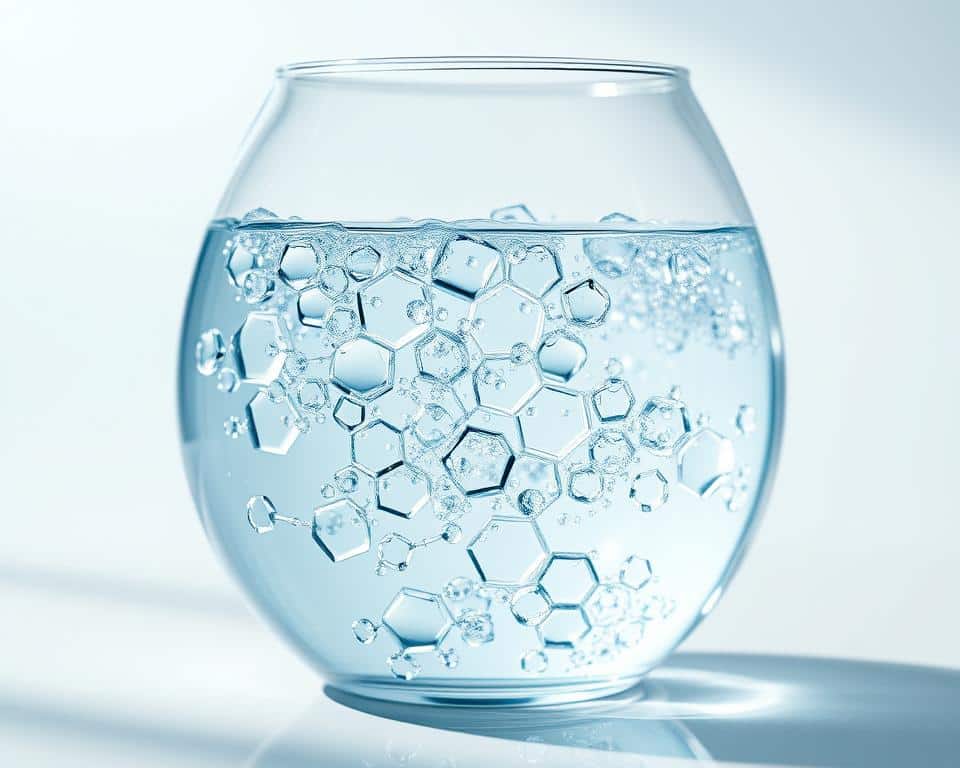
Hexagonal water patterns can form briefly. But water molecules are in constant motion. Any local hexagonal arrangement is fleeting, not a permanent, bottle-wide change.
EZ “fourth phase” and dr. gerald pollack
Gerald Pollack’s lab described an exclusion zone near hydrophilic surfaces with odd traits. That finding is intriguing, but replication and real-world health links remain debated.
Magnetized water tests and light effects
A 2008 study found no meaningful change in pH, hardness, or conductivity after magnetized water treatment. Some experiments show that light, especially infrared light, can shift interfacial behavior in the lab. Still, we lack evidence that shining light on a glass produces measurable health results for cells or human systems.
- I separate compelling lab data from claims that leap to health outcomes.
- Short-term interfacial effects exist; long-term practical impact is unproven.
- I watch for peer-reviewed research before accepting broad claims.
| Lab finding | Practical implication |
|---|---|
| EZ layers near surfaces | Interesting, limited to interfaces |
| Transient hexagonal clusters | Short-lived in bulk liquid |
| 2008 magnet tests | No change in pH/hardness/conductivity |
How people try to make “structured” water
People use many home methods to change how a drink looks, feels, or tastes. I’ll describe the common ways, what they claim to do, and sensible limits to those claims.
Vortexing and “charging” water
Vortexing means swirling a jar or using a small device to mimic river motion. Fans say this encourages hexagonal water patterns. At minimum, vortexing makes drinking feel intentional, which can increase intake.
Infrared light, UV light, and sunlight exposure
People place bottles in sunlight or use lamps that emit infrared light. Lab work on interfacial layers sometimes shows changes under light, but real-world effects on cells remain unproven.
Gemstone bottles, crystals, and magnets
These are common for aesthetic and ritual reasons. Users report more energy, yet solid clinical data tying stones or magnetized water to physiological change is missing.
Ionizers, filtration, and electrolysis devices
Devices can shift pH and redox potential. That changes type water chemistry, but altered numbers don’t equal improved health. Clean, safe sources matter first.
- Try small, low-cost tests—mindful vortexing or brief sunlight—while keeping expectations measured.
- For a DIY guide, see this how-to resource: how to make structured water.
Evidence check: what research actually shows in the present
I reviewed the literature and found a pattern: animal models sometimes show signals, while human trials are small and uncontrolled. That disconnect matters when you want to know whether any process changes real health outcomes.
Animal studies and why they don’t prove human gains
A 2013 rat study reported lower blood glucose and reduced liver DNA damage after eight weeks on magnetized water. Those results suggest a biological effect in that model.
Animal models help generate hypotheses, but differences in dose, metabolism, and disease induction make translation to humans unreliable. Small lab signals are not the same as proven health results for people.
Small human trials without controls
Several short studies tested topical or oral uses of magnetized water but lacked proper control groups.
- A 2017 two-week mouthwash study reported fewer Streptococcus mutans, but no control group limits interpretation.
- Two 2023 trials used magnetized saline in a hair lotion and a facial serum; both showed visible improvements yet had no controls and unclear formulas.
Funding, marketing, and how to weigh claims
A 2021 review found positive animal results but was paid by a company that sells structured water products. That funding link raises bias concerns when authors interpret weak data as decisive.
| Study type | Key finding | Limitations |
|---|---|---|
| Animal (2013) | Lower blood glucose, less DNA damage | Model-specific, not human-tested |
| Human (2017) | Reduced oral bacteria | No control group |
| Human (2023) | Improved hair/skin appearance | No controls; unclear ingredients |
In short, current research offers intriguing signals but weak evidence for broad claims about drinking structured water and whole-body effects. I recommend better-designed human trials before accepting marketing promises.
Benefits of structured water versus regular water: what I recommend
Before you chase special devices, I focus on simple habits that reliably support hydration and health. Medical research shows staying well hydrated helps mood, digestion, and exercise recovery. That holds whether you drink regular water from the tap, a filter, or a bottle.
Hydration basics that genuinely move the needle
Drink to thirst and keep water handy. Aim for pale, clear urine most of the day as a simple gauge.
Increase intake when you’re active, pregnant, nursing, ill, or in heat. Pair fluids with electrolytes during long workouts or heavy sweating to help cells stay balanced.
Filtered vs tap vs bottled: practical choices for everyday health
Tap water is a low-cost, safe option in most U.S. systems. Use filtered water if your tap tastes off or local tests show contaminants.
| Source | When to pick it | Notes |
|---|---|---|
| Tap water | Safe, daily use | Cheap; convenient |
| Filtered water | Bad taste or local issues | Improves flavor; removes some contaminants |
| Bottled water | Travel, emergency, quality concerns | More expensive; not always better |
In short, prioritize safety and consistency first. If regular water tastes good and you drink it steadily, you’re covering most hydration benefits. Try add-ons only after you verify they help your sleep, energy, or digestion.
My take: the potential benefits and the myths, side by side
I try to balance curiosity about personal reports with a strict look at the data. People often describe better energy, calmer skin, and quicker recovery after trying this idea. Those reports are worth noting, but solid human evidence is limited.
Many positives may come from bundled habits—drinking more, getting sunlight, moving, and paying attention to routine. Those actions help our bodies without needing any special treatment to the liquid itself.
I remain skeptical of big claims around immune boosts, performance boosts, or anti‑aging effects until larger, controlled trials appear. Lab findings about interfacial layers are intriguing, yet they don’t prove a drinking-glass change matters for people.
- I’m open to potential benefits people report, but I want better evidence and clearer trials.
- Try low-cost, low-risk experiments, and track sleep, energy, and skin over weeks.
- Prioritize proven hydration habits first; treat special products as optional extras.
| Claim | Research reality | What I suggest |
|---|---|---|
| Boosted energy or immune function | Small, uncontrolled studies; mixed results | Test short trials, track outcomes |
| Lab interfacial effects | Confirmed at surfaces; unclear in bulk | Watch for better human research |
Conclusion
After weighing studies and stories, my bottom line favors simple habits over costly gadgets. I don’t see compelling proof that structured water beats regular water for everyday health.
Prioritize clean, safe sources — tap with a good filter when needed — and steady drinking that your cells actually rely on. Enjoy nature and light safely; those actions help mood and sleep even if any special treatment adds little.
People share strong stories, and small animal or uncontrolled human trials exist, but conflicts of interest and weak study design limit what we can claim. Try low‑cost experiments if curious, track results for weeks, and keep expectations grounded.
My final take: regular water delivers real gains at low cost. Stay hydrated, stay friendly in your skepticism, and watch the research as it evolves. Thanks for reading.
FAQ
What exactly do people mean when they say “structured water”?
I use the term to describe water that proponents claim has an altered internal arrangement of molecules—often called hexagonal clusters, EZ or H3O2—rather than typical H2O. People suggest this rearranged form delivers better hydration, more cellular energy, or improved circulation. Scientific verification is limited, so I treat many of these claims as hypotheses rather than proven facts.
Are there real health gains from drinking this type of water compared to regular tap or filtered water?
I find that basic hydration, mineral balance, and clean water quality matter most for health. Small studies on magnetized or “charged” water show mixed results, and larger human trials are lacking. So while some users report more energy or better sleep, those outcomes often come from improved overall fluid intake or placebo effects rather than a verified change in molecular structure.
How does Gerald Pollack’s “EZ” or fourth phase idea fit into the science?
I respect Gerald Pollack’s creativity and laboratory work suggesting a structured layer of water near hydrophilic surfaces. His EZ concept is intriguing and has motivated new experiments. Still, mainstream chemistry and physics require more reproducible data and clearer links to whole-body effects before EZ becomes an accepted explanation for health outcomes.
Can vortexing, magnetizing, or using crystals actually change water at the molecular level?
I’ve read experiments that report temporary changes in pH, conductivity, or dissolved gases after magnetizing or vortexing. Those shifts often reflect minor physical or chemical changes, not a stable reorganization of every molecule. Crystals and gemstones likely act through placebo or trace mineral leaching, not by permanently reordering H2O clusters.
Is there evidence that magnetized water helps animals or humans?
Animal studies sometimes show benefits in growth, digestion, or stress markers when exposed to magnetized water, but translating those findings to people is hard. Human trials are small, poorly controlled, or industry-funded. I recommend caution and looking for well-designed randomized studies before accepting health claims.
What did the 2008 magnetized water test reveal about pH, hardness, and conductivity?
I note that some controlled analyses found slight, short-term shifts in pH, mineral hardness, and electrical conductivity after magnetization. Those changes were modest and inconsistent across labs. They don’t prove a long-lasting molecular restructuring, but they show that physical treatments can alter measurable water properties briefly.
Can UV, infrared, or sunlight “structure” my drinking water?
I use sunlight and UV mainly to reduce microbes or to warm water; infrared exposure can affect temperature and dissolved gas levels. These treatments can change some physical parameters, yet they don’t provide solid evidence for creating a stable, health-promoting molecular arrangement in drinking water.
Are ionizers or electrolysis devices effective for improving hydration or health?
I find ionizers can shift pH and produce hydrogen-rich water, which some studies link to reduced oxidative stress in limited settings. Still, benefits for everyday hydration or long-term disease prevention remain unproven. If you choose an ionizer, pair it with independent water testing to verify output and safety.
What practical steps actually improve hydration and cellular function?
I focus on drinking enough clean, filtered water; maintaining electrolytes when needed; eating water-rich foods; and avoiding excessive caffeine and alcohol that cause fluid loss. Those measures reliably improve focus, energy, digestion, and skin health more consistently than niche treatments claiming to restructure molecules.
Should I switch from tap or bottled water to any specific type to get these effects?
I recommend filtered water if your tap supply contains chlorine, lead, or contaminants. Bottled water can be convenient but varies widely in quality and environmental cost. The safest route for daily health is clean, palatable water that you’ll drink consistently—filter choice depends on local water testing and personal preference.
How can I tell if claims about a product are overstated or marketing-driven?
I look for peer-reviewed studies, independent replication, and disclosure of funding. Watch for grand promises—like curing chronic disease—and for vague phrases such as “energizes at a molecular level.” Transparent companies cite research and allow third-party testing; marketing-first brands often rely on testimonials and buzzwords.
Are there risks to using these devices or drinking treated water?
I consider most methods low-risk if the device is certified, maintained, and doesn’t add harmful residues. Risks arise when people replace proven medical treatments with unproven water therapies or when poorly made devices leach contaminants. Always check certifications and consult a healthcare provider for medical conditions.
What areas need more research before I’d fully endorse these ideas?
I want large, blinded human trials linking specific water treatments to measurable clinical outcomes—improved sleep, measurable metabolic changes, or immune function—plus reproducible lab evidence showing stable molecular restructuring under realistic conditions. Funding transparency and independent replication are essential.
Can I try these approaches safely while keeping realistic expectations?
I do recommend curiosity balanced with skepticism. Try simple, low-cost experiments—filtering, drinking enough fluid, or using a tested hydrogen generator—and track how you feel. Avoid expensive systems sold with extravagant health guarantees, and don’t substitute them for medical advice or proven treatments.